Thursday, 28 May 2009

harvest hurrah!!


I'm up to my elbows in fruit again, at last. Spent today in the hot hot kitchen making araza jam and mango chutney. Batch after batch alternating yellow and a deep pink-orange as recycled jar after jar was filled and sealed. A delicious day. I have a lot to write: one reason for so few posts this month was our trip to Cuba. When I get time enough to sit and think, I'll write.

Friday, 8 May 2009

another great thing about bananas


I am becoming passionate about fungus. I'm busy collecting spores, inoculating beds and researching the incredibly diverse and interesting fungi we have here on the farm and in the botanical garden. We're cooking with various species, making tea from others and thinking about how we can use still others in our reforestation and gardening projects.

There is very little tradition of using or collecting, or cultivating, mushrooms in Costa Rica, but little by little we are piecing together information from the indigenous workers we know. Thus we learned about the 'hongo de banano'.

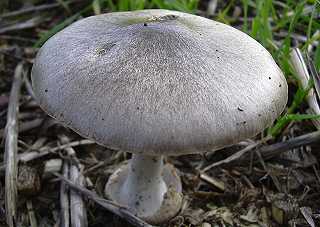
This is actually Volvariella volvacea, the Paddy Straw mushroom, except here it grows from the stumps of bananas. And it's delicious. Very delicious picked right off the stump and carried straight to the frying pan. The only problem we have at the moment is that there are just not enough for our liking. So I'm collecting spores and inoculating banana fibers and coconut fibers, and growing mycelium on moist corrugated cardboard. I hope to increase these naturally occurring wonders to the point where they are springing from every banana plant and also from some specially prepared beds.

bananas

The banana trees are producing after a lull, and I'm very happy to see them. We have several varieties here on the farm, from the praying hands to the thousand fingers to the red to the cuadrado: we have no cavendish bananas. Twenty minutes drive north will take you through acres and acres of dwarf cavendish bananas, lined up in Chiquita and Del Monte plantations. The trees are tied with wire to support them and each heavy racaeme is enclosed in a blue plastic bag impregnated with pesticides. There are two issues facing the monocultured cavendish: nematodes and leaf blight, and there's rising fears that the cavendish will soon succumb like its predecessor, the gross michelle. Monocultures have a bad habit of being short term: once a pest or problem takes hold it can rip through a plantation without anything to stop it. Biodiversity makes sense!!

No-one here buys plantation bananas, even without the label they are easy to spot: no bugs or flies circling them. The cavendish works well for the plantation owners because it is a smaller tree with a high yield and quick too. The banana can be picked very green and ships well. Great in terms of shelf-life and presentation for supermarkets, but it loses a lot in terms of flavour. Cavendish bananas just don't taste as good.

Here on the farm we leave the bananas on the trees for as long as we can, to just days before the fruit bats devour them. We cut the 'trunk' and leaves and pile them around the base where they will gradually melt down into compost. The racaeme we hang until it ripens, sometimes covering it with a gunny sack to keep those bats and 'possums off. We dry a lot of our bananas for later use in trail mixes, granola and cookies, and we share the rest with the dogs who really enjoy them.

We grow cuadrados which are a short, stocky, 4 sided banana which is not as sweet and can be used like a plantain. They contain small round black seeds and are better if they are boiled for 10 minutes or so to soften them. If they are very ripe they don't need to be cooked. I've been making chutney and 'marmalade' and they do really well giving a good banana flavour but maintaining some form and bite.

Banana and Cinnamon 'marmalade'

24oz bananas, chopped (firmer cuadrados are better boiled first)
16oz raw brown sugar
1 1/2 teaspoons cinnamon (or to taste)

Heat sugar with a spoonful of water until dissolved, add bananas and cinnamon and simmer for 30 minutes or until a spoon will leave a clear trail on the bottom of the pot while stirring the mix. Can in sterilized glass jars and seal in a hot water bath.


Banana and Lime Chutney

6 cups chopped banana
grated rind from one lime
1 onion, chopped
2 cups raw brown sugar
1 cup cider vinegar (or banana vinegar if you have it!)
2 cloves garlic, or to taste
1/4 cup crystallized ginger
1/2 teaspoon fresh finely chopped hot chili, or to taste
1/2 teaspoon salt
good pinch black pepper
1 teaspoon mustard seeds

First boil sugar and vinegar, then add all other ingredients and simmer uncovered for at least 40 minutes until mixture is thickened and smells divine. Can in hot, steralized glass jars and seal in water bath. Chutney is great with cheese, chips, tortillas, Indian foods, straight out the jar.

Wednesday, 15 April 2009

sloths and sloth rescue


The first time I saw a sloth I was taken aback by its strangeness: the length of its forearms, the broad grin, the slowness of its reach. Days later I found an arm, decaying and sea soaked and was amazed by how similar it seemed to my own, and how alien it looked ending in sharp talons rather than a hand. I became able to spot the three fingered sloths high in trees sitting sagely watching the world, and came to regard them as benevolent forces in the rainforest, silent watchers of the world: their unending smiles a reflection that indeed all would be well.

There are two types of sloth in Costa Rica: the Pale throated three toed sloth (Bradypus tridactylus) and Hoffman's Two toed sloth (Choloepus hoffmanni). They are as closely related to one another as they are to their cousins the anteaters and the armadillos. The three toed is diurnal, and the two toed nocturnal.

The sloth is a fascinating creature and a monument to natural survival. Central and South America was once home to giant ground sloths as big as elephants which were hunted to extinction. However the species adapted to save itself, resulting in the varieties of two and three toed sloths which are seen today. The sloth has scaled the trees, diminished greatly in size and taken on several protective aspects which have ensured its survival.

The three-toed sloth

Almost everything about a sloth is slow (they scratch at normal speed), and for good reason – energy conservation. Their diet of leaves, twigs and buds provides little protein or energy and they lack any enzyme to break down the cellulose present in the leaves. Sloth digestion is very slow – it takes about 4 weeks for food to move through their system, and they rely, as Howler Monkeys, on internal fermentation to release nutrients.

Due to their slow metabolism, sloths have low, though variable, body temperatures. They are easy to spot in the early morning as they must find a warm open area to soak up the sun. The sun provides the energy and heat to raise their body temperatures and boost their fermentation process. During wet seasons, especially when there are many cloudy days, sloths can die from starvation even with full stomachs because they don't have the heat to ferment their food. It takes 4 weeks for the sloth to digest one meal.

While a sloth feeds from as many as 40 trees, they will spend most of their time in just a few and each will have a favourite tree. In Costa Rica the Cecropia tree is called the sloth tree as these are often the best places to spot sloths. The Cercropia is not everyone’s favourite, but they do seem favoured by many and the tree’s open branches and large, fairly sparse leaves allow for good sloth spotting.

Once a week the sloth will descend from the safety of the canopy to urinate and defecate. The three toed sloth digs a small hole with its tail, and when finished with his weekly business will cover the hole with leaves. A sloth will routinely shed about a third of his body weight in his weekly visit. Coming down to the ground is a dangerous business, the sloth moves very slowly down and back up the tree often using the opportunity to change trees. His speed could be seen as a method of protecting himself – already well camouflaged , his slow movements do not alert any would be predators of his whereabouts. Burying his waste would also help disguise his presence.

Sloths have thick shaggy coats which act as insulation for their low body heat. The hairs are very unusual in that they have cracks (three toed sloth) or channels (two toed sloths) which provide an ideal environment for certain types of green algae. This algae grows throughout the fur and gives an overall green tinge to the coat. No-one really knows why this relationship exists but it is thought to act as camouflage. It is also believed that the algae is able to pass nutrients to the sloth through his skin. The coat also provides a home for the sloth moth, beetles and mites. Each adult sloth can play host to 100 moths and a thousand beetles. The entire life cycle of beetle and moth is connected with the sloth, each spending its larval period in sloth dung, and their adult period eating the algae. What the sloth gets out of this special relationship we don’t quite know.

The two toed sloth

The two toed sloth is nocturnal and very difficult to spot: during the day he curls his head to his belly and looks like part of the tree he's sleeping in. The two toed are omnivorous and have sharp canines, it's believed they will eat lizards and birds or eggs when they find them in the trees. The metabolism of the two toed is different from that of the three toed, being nocturnal it cannot rely on the sun to aid fermentation. The two toed survives better in captivity, where it is a more gregarious and social creature than its three toed cousin.

The biggest threats facing sloths in Costa Rica are loss of habitat, electrical wires and poaching.

Aviarios is an incredible sloth resource and rescue center here on the Caribbean coast. Beginning over 17 years ago with the rescue of Buttercup, the center has gradually become the foremost research establishment for sloths worldwide. Visitors can meet several adult and baby rescued sloths and enjoy their calm presence. It's a wonderful place to visit and offers sloth adoption to help with the costs of caring for these animals.

dog day


We have an ongoing problem with fleas. We've gone through the regular methods: bathing, treatments, feeding - but over a period of 20 years in this isolated spot the fleas have become resistant. Our latest effort seems to be working, albeit slowly. Each morning I'm massaging oregano oil diluted in vegetable oil into the skin around tails, on bellies and legs. The fleas either die or become slow enough to pull off and kill. The dogs smell great. Three of them enjoy it, but Lyla does all that she can to get under the house and roll in the dirt. She reappears with two dirt circles around her eyes, a sort of crazy-lady makeup.

Tuesday, 14 April 2009

new arrivals


It's been a week of new arrivals: a friend visiting from the States brought baggage full of wonderful treasures and it's taken us time to sort through everything. Most important were the live cultures and mold spores for shiitake, tempeh and koji, all of which arrived safely.

The shiitake spores are now inoculated into several logs of laurel and macadamia. It was a process finding the right logs - the correct balance of heart and sapwood, the perfect ratio of bark, wood density and age are all important factors in selection. One wants logs which are easy enough to transport, plus the larger the log the longer it takes for the mycelium to fully colonize - and the further away the mushroom harvest. We selected differing sizes to stagger harvest times and to see which type and size is most suitable to our climate and temperature. Trees have anti-fungal properties which weaken as the trees die, allowing nature to take her course and the wood to become home to decomposers. Thus we had to find logs which were dead, but not so dead that they already housed a host of fungi types. Many of the logs lying around here in the tropics are still alive and will sprout new growth from bark or tips: it took time even here on the farm to find suitable pieces. Another issue is finding logs which are termite free - we want our mycelium to feed on the wood, not insects! Finally we had enough for our 300 dowels laden with shiitake mycelium. It was then a case of drilling holes, hammering in the dowels and sealing with wax (I melted down Stockmar beeswax crayons from my former life). Now the logs are sitting below some hefty heliconia plants in good shade just by the kitchen. We'll hopefully be eating mushrooms from them in a few months. Very excited! Cultivating mushrooms will close the circle here on the farm, more on that later.

My fresh tempeh starter is wonderful, and the koji? Well I'm very excited about the koji and look forward to making our own miso and amazake, but the next week or so is very busy with the reforestation project and so my forays into Aspergillus oryzae will have to wait.

Another wonderful new arrival at the farm is our new beagle, Duku. Duku is already 7 months old and super sweet. Right now he is running madly all over, nose to the ground and short legs bounding through the foliage taking it all in. Must be lovely to be a puppy.

Thursday, 2 April 2009

water apple blossom


These are petals from the Manzana de agua blossoms, covering the ground. Not so much like fallen apple blossoms from further north, but just as beautiful . . .

Wednesday, 1 April 2009

Mango Season


It's Mango season and I'm up to my elbows in soft sweet splendidly golden pulp. Although we have a couple of mango trees on the farm, and they are easily spotted all around the area, they do not produce well in this climate. Mangoes like a long dry period to set and ripen their fruit and there's just too much rain here.

The mangoes I'm using come from the Pacific side, around Orotino. There are many farms but even more locals with a few trees selling their produce by the roadsides. The harvest began about 6 weeks ago and will continue until the first real rains, sometime in May.

Mango trees (Mangifera indica) are really rather beautiful. They are native to India, Pakistan, Bangladesh and South east Asia. There they can grow very tall - over 90 feet and live very long, productive lives, some still fruiting at the ripe old age of 300! The mango is an evergreen with long (up to 12 inch) glossy, narrow dark green leaves. The flowers form on spikes and are small and white to cream coloured. They have a pleasant, sweet smell. The tree branches very nicely and can have a 30 foot crown: they provide good shade. In Costa Rica the trees are smaller and there are several cultivars, with three prominent varieties: Tommy Atkins, Haden and Erwin. We are using the Tommy and Haden fruits: the mangoes are a good size, with a small seed and soft non fibrous flesh. They are also very pretty - when I lived in California I raised lovebirds and the colours in my kitchen remind me of a small flock. I do believe my first bird was named Mango.

The mangoes we're using are ripe, but traditionally here mangoes are eaten green with salt and lime juice. There are many opportunities to buy small bags of sour, juicy fruit with a wedge of lime and a good pinch of salt from street vendors. Seemingly mango like this is very good for the digestion. I know the monkeys prefer them like this too, if the forest floor is anything to go by.

At last, after what seems like a long resting period, my dehydrators are busy again drying mango, salak and weekend bananas. We're also making mango chutney:

2 1/2 lbs mangoes
2 cups brown sugar
2 1/2 cups vinegar
2 1/2 tablespoons salt
2 inch piece ginger
1 scotch bonnet chili (or to taste)
4 cloves garlic
2 teaspoons coriander seed
2 teaspoons mustard seed
3 onions, chopped

Peel and dice the mangoes. In a blender process chopped chili, garlic and ginger with a little of the vinegar. Heat rest of vinegar with sugar, simmer for 10 minutes. Stir in the garlic / chili / ginger paste and cook for a further 10 minutes, stirring. Add remaining ingredients and allow to simmer for 25 minutes stirring occasionally as it thickens. Pour into sterilized glass jars and heat seal. Enjoy on homemade crackers with cream cheese, or with anything really.

Thursday, 26 March 2009

visit


A friend from Canada came for lunch yesterday, fresh from the deep freeze up north. As the plates were being cleared a single toucan came flying in to perch 12 feet from the table. He was a Chestnut-mandibled toucan, the largest of the three species, beautiful and large with bright yellow throat and face with a sudden red blast of colour at the tail. He perched looking at us with his sideways gentle sweep of the head: the bill is too large to let him look straight on, and then began calling for his mate. She was clearly having other ideas and called back from the other side of the house. He pondered for a moment and then took off at speed, flying right past our noses, the sound of his wings beating were loud enough. Our visitor was delighted and we followed the toucan's flight right to a large female sloth. She was hanging from two vines about 10 feet from the other side of the house. She hung there with her legs akimbo unsure which vine to take, then slowly let go of one and with a graceful movement any acrobat would be envious of, lowered her whole weight to the lower vine with one strong forearm.We stood drinking our tea, willing her to move again. At our feet one of the dogs barked and we followed her gaze to a further tree where 4 howler monkeys were snacking on leaves. Our visitor was quite taken with his lunch and afternoon show. So nice when a hope comes to fruition!

Monday, 23 March 2009

caimito


Beside the house, overhanging and touching it is a large Caimito tree. The Caimito (Chrysophyllum cainito) tree is a large, evergreen tree native to Central America and the West Indies. It is a pretty tree with leaves dark green on top and below a rich bronze colour. The fruit is known in English as star apple, and is a delicious, sticky lilac, persimmon like experience. It exudes a sticky white latex that will clamp lips shut, but is worth it for the sweetness of the pulp. I love caimitos, but despite the tree being fairly laden and close to the house, I have not had one. Every night the kinkajous come and feast, throwing their leftovers on the roof and the forest floor right by the steps into the house. The dogs bark at them, but the kinkajous don't seem to care and gorge. They are not known as the friendliest of creatures and sometimes there's a scuffle as they bicker and clack at each other, but there's plenty of food and the arguments have been kept to a minimum. Yesterday morning I watched two good sized raccoons descend the tree. The male came down first all in a great whoosh and disappeared down the hill. His mate came down very slowly and tentatively, all eyes and twitching nose. She was right to be cautious - the dogs aren't so keen on raccoons, but they were all out for their morning walk and she had the freedom to leave. The fruit is mostly out on the thinner branches, I wonder what the raccoons are eating up there?

Thursday, 19 March 2009

new kitchen


We've moved production out of the house and into a new kitchen above the office. It's a beautiful space built from wood sustainably harvested from the farm along with a fine slab of pilon from a friend. We splurged rather heavily on new appliances and so have a spanking new 13 cubic foot fridge, a 3 ring gas stovetop and a small convection oven. We also have a built in incubator for the tempeh and a built in dehydrator for many things. And there's hot water from solar collectors in the roof!! There are many windows - with screens, and I'm right above the nursery and the medicinal garden, quite a lovely work environment. This may well mean that I'll finally get out of the kitchen and back into the dirt, it's been a long while . . .

It's hot and sunny here at last and working in the kitchen is a bit of a bikram experience: with the stove and oven on, the incubator and dehydrator going and the ambient temperature in the 80s, I must be dropping pounds in sweat alone. But it feels really good.

Monday, 16 March 2009

time slows down


I've been operating on a different time scale recently, seems another lesson in my life to slow down and enjoy the moment. This latest teacher is very small but potent: my sourdough starter. Living life to the swell and fall of yeast is an exercise in laying back in a primordial ooze, it's about as basic and as slow as one can get. And yet there is so much strength and potency and abundancy in this primordial bath.

The starter began life as a mix of one cup rainwater (all our water here is rainwater) and one cup wholewheat flour. It sat out on the counter covered with a tea towel and was fed every day with another half cup water and half cup flour. I mixed it vigorously twice or thrice a day and on the 4th day was rewarded with bubbles. Another two days later and it was looking thick and bubbly and had that lovely yeasty smell. Now the starter lives in the fridge and is fed twice, sometimes three times a week whenever I make bread. Making sourdough bread is a three day process. The actual preparation is short and simple, but it takes time for raising and re-raising. The difference between walking into a store and buying bread and making it from scratch is not so much a matter of difference in convenience as a lesson in natural law and our place as part of a greater wholesome whole. Yeast has its own agenda, one must have respect and appreciation. Louis Pasteur had it right when he said "the microbes will have the last word".

Before I make bread I take the starter out of the fridge pour it into a bowl, feed it a cup of flour and about 1/2 cup of water, cover with towel and allow it to swell overnight or all day.

Sourdough recipe
1 cup sourdough starter
2 teaspoons salt
2 teaspoons sugar
1 cup of kombucha (or dark beer, warm, or boil water from pasta, potatoes or other starchy veg, or regular water)
flour to make a good dough, I use about 3-4 cups but it depends on weather and humidity
time and openness to enjoying the moment

anything can be added to bread, at the moment I add sunflower and sesame seeds

mix the starter, salt, sugar and liquid (and any additions). Add a cup of flour at a time mixing thoroughly, until you have a nice firm dough. Turn onto floured surface and knead for 15 minutes. Put in oiled bowl and cover with tea towel and leave in a warm place overnight or all day. Sourdough takes longer to rise than bread using commercial yeasts. Next morning form into loaves. This recipe makes me two loaves. I divide the dough in half, flatten it out into a rough circle and roll it up into a short thick sausage. Place on baking trays, cover with tea towel and leave somewhere warm either all day or overnight. Bake for 30 minutes in a 400 degree oven, the bread is ready when it sounds hollow when tapped.

Enjoy with nutmeg preserve!

Saturday, 28 February 2009

nutmeg preserve


Nutmeg harvest is in full swing - again: the nutmeg seems to fruit every 2-3 months, and sporadically between times. It's a pretty tree, medium sized with shiny leaves in a pleasant shade of green and fruits that look a lot like apricots, and it comes in both genders, one needs to have several trees to ensure a good crop. When the fruits ripen they split in two and fall to the ground revealing the glossy nutmeg seed inside and the incredible red lacy aril: mace. the first time I saw mace I was spellbound by the colour and the beauty, and that such a thing could be hidden away inside a fleshy peachy fruit.

The Nutmeg tree is native to the Spice Islands (Moluccas) and was at one time a fiercely guarded secret by Dutch colonialists who were known to travel to neighboring islands to destroy Nutmeg harvests. Later French and British colonialists exported the trees to Madagascar and the Caribbean. Grenada, the Spice Island of the Caribbean, is famous for its nutmeg: the country's flag is red, yellow and green in representation and one even appears on the left of the flag. Both nutmeg and mace are widely used in cooking imparting a sweet, warm woodsy flavor to drinks, puddings, cakes and savory dishes. Nutmeg has long been supposed to have magical properties, in medieval times it was carried as a talisman to protect against misfortune and illness, and even used to attract admirers! Medicinally it is used to aid digestion.

The mace is removed after harvest and dried separately, the colour fades from a brilliant red to a deep orange amber, and the seed shrinks a little, the nutmeg inside can be heard rattling around. Fresh nutmeg has to be refrigerated, but dry can keep for a very long time.

The fruits have for a long time been left to rot where they fell, becoming compost for the tree, until that is I discovered that they are edible! The flesh is very woody and while subtly flavoured like nutmeg, hardly sweet. I've been making jam and it's very good. It comes out with an apple butter texture and a warm, sweet nutmeg flavour - excellent with ginger scones!

-nutmeg fruits, the fresher the better, but soft is fine too
-brown sugar
-a little nutmeg, cinnamon and ginger (last two are optional)

Wash, peel and cut the fruit finely. Add water to cover and boil until soft, and until 1/3rd of the water has boiled off. Blend to a paste, weigh and add an equal amount of brown sugar. Add some grated nutmeg, about 1/4 teaspoon for every pound of fruit - depending on taste of course, cinnamon and ginger can also be added at this stage. Return to pan and bring to a boil, stirring constantly. Cook until the preserve thickens (a spoon will make a clean trail when drawn across the bottom of the pan) - you can also test for readiness by dipping a spoon and allowing it to cool - if this sets, then your preserve is ready. Bottle in clean, sterilized jars and seal in a hot water bath. Enjoy!

Monday, 23 February 2009

farm, what farm?

It seems that most of my posts lately have been about what happens indoors rather than what goes on in the outside, green part of the farm.

Mostly we grow fruits and spices and this is the lowest season of our year. We harvested the last of the black pepper in January and won't harvest more until May; the salak (snakefruit) has been intermittent and spotty recently and hasn't provided a solid harvest, we've dried a lot of the crop and propagated seeds for the nursery. Our ginger harvest is fairly steady and I've been busy making crystallized ginger for the market as well as ginger syrup and scones.

But slowly things are beginning to appear, the nutmegs are looking nice and heavy and are almost ready to pick. They drop when ready and are easy to harvest. And the cas is coming into season again. I'll be making fruit leather before February's out I hope.

But for now it's rainy and I have work to do indoors. Our tempeh is building a reputation locally and we now sell to two restaurants, I'd like to add a couple more. And I've been really enjoying working with ferments. I have sourdough bread rising above my head now, while behind me sits vats of seaweed kimchi.