Showing posts with label chocolate. Show all posts

Sunday, 6 September 2015

oh the life of a chocolatier

We live in an interesting community: a heady and often strange mix of folks from all over the world with all sorts of appetites. There's a undulating collection of raw foodists among them who have an enormous appetite for fresh organic fruits, and cacao. They are among our best clients: both at the farmers' market, and for our fruit trees and "permaculture preferred plants".

So we often get asked for raw chocolate bars. And up to recently we've said no.

But now we can say yes, sort of.

Raw chocolate is an interesting concept. I think to really define it one would have to define chocolate.   From a quick glance at the top hits of online dictionaries, chocolate is the result of roasted and ground cacao beans. So, not raw then.

From a deeper look at what constitutes raw it seems that food is 'live', minimally prepared and remains below 120 degrees max in any preparation.

Fermented food is a somewhat grey area. But typically rejected as temps can rise and enzymes can be destroyed.

So. A purely raw cacao bar would be one made with unfermented beans, milled, conched and tempered at temperatures below 114F. With a sweetener that was likewise prepared.

Unfortunately for people who like chocolate, this bar would be unrecognizable. The fermentation and roasting really create the flavors we associate with 'chocolate'. Truly raw bars tend to be acidic, astringent, and not really appetizing. Or rather, not really like chocolate. Taste after all is subjective.

Life is most often a compromise, and few purists really exist.

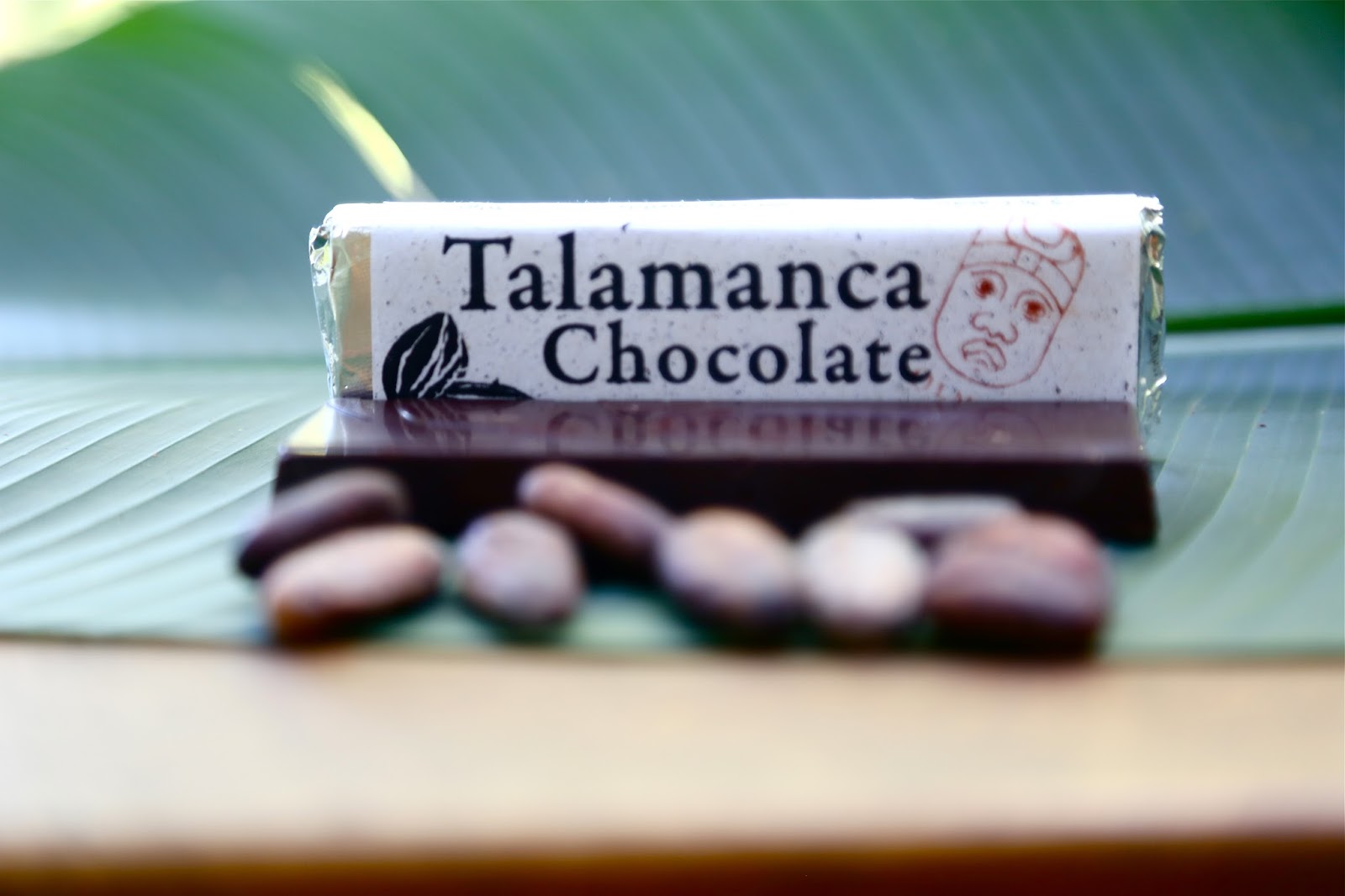
We have developed a bar that we think is a good compromise and judging by it selling out at the market yesterday, it seems others think so too.

The bars are 75% cacao, 60% of which is raw, 40% is roasted. This maintains the overall flavour of our chocolate while introducing the particular raw flavour and mouthfeel. The chocolate is milled, conched and tempered, at the most at 109F. This took some doing and experimentation and very careful scrutiny and temperature taking. But we've got it now!

I'm working on inclusion bars which will taste wonderful, and also appeal to folks who want to eat the healthiest and most nutritionally supportive ingredients. We have a 'Tryp' bar which has raw dried organic durian and macuna, and a 'Monkey' bar with raw dried banana, raw cacao nibs and trametes versicolor mushroom. More to come, I'm consulting with a raw nutritionist to make sure we are producing the very best chocolate we can.

Tastes pretty darn good too. Love chocolate.

Monday, 2 November 2009

cacao harvest time


roasted cacao beans

We're in the middle of our cacao harvest. It takes a while, spread out over a course of maybe 5 weeks as we wait for pods to ripen. The cacao pods grow from the trunk and branches of the tree and change from a pale green to a darker yellow or red before they are ripe.
This farm used to be a cacao plantation, but was abandoned in the 1970s due to the Monila blight which took out almost all the cacao farms in this area. The blight attacks the fruit, not the tree, so there are still many many hundreds of trees around which produce fruit. The harvest is a spotty thing, as we do not treat the trees or fight the blight, we harvest what we can: the rest the squirrels or blight takes. It's not a huge harvest, just enough to last us the year.

The pods are hand picked with a curved blade on a strong stick - cacao pods rarely fall by themselves and last years blackened, eaten out pods can still be seen on the trees. They do make an excellent mulch though, so we like to see them on the ground. After picking they are cut open with a machete and the insides scooped out into a bucket. I've written about cacao several times on this blog (search for cacao in the search tool), so won't go into too much detail herte about how it all looks. When the bucket is full it is emptied into a gunny sack - in our case old rice sacks, and hung in a cool covered area, for 5 days or so. In the past the cacao was piled onto banana leaves and covered with more leaves.

Inside the sack the beans ferment in their white gloopy pulp: fruit flies, beetles, earwigs are all part of the process. The bag smells like fairly bad and oozes a sticky transparent juice. Not really what one would associate with chocolate.

After 5 days the beans look like beans - the white pulp covering is gone and they look like smooth plump almonds in a tawny covered skin. Now they are sun dried for 3 or 4 days or until they snap cleanly when broken in two. At this stage they are ready for storage - the major chocolate producers buy them at this point and roast them as needed. We roast ours just before we use them for the best flavour.

The beans are edible at every stage, raw in their pulp they are bitter and 'green', taste nothing like chocolate. Dried they are still bitter and smell a little chocolately but have no real taste. After roasting they begin to have the wonderful aroma of chocolate. We use our in granola bars, in granola, in dried fruit mixes and to munch on when we need an energy boost.

cacao pods on the tree

pile of pods, each pod contains 20-50 beans

the gunny sack with beans and pulp

inside the gunny sack, day 2

Wednesday, 18 February 2009

cacao


I'm roasting cacao for granola bars. It's a fun job, the hard stone sound of dried bean against cast iron skillet, the growing scent of chocolate and the sudden pop as the first bean splits its shell. Then I can take them off the heat and wait until they are cool enough to handle before I shell them. Cacao is much easier to shell while it's still hot.
The botanical name for the cacao tree is theobroma cacao, Greek for food of the gods, it was revered by the native Indians as a food of the gods. The story goes that the first cacao tree grew from the dead body of Sura, the co-creator god of south and central america. It was used ceremoniously, as medicine and as money. Is this where the expression ‘money grows on trees’ comes from? In the Mayan culture a porter earned 100 cacao beans a day: the price of a hare; an avocado cost one bean; a fish wrapped in a corn husk cost 3. It was taken or exchanged during both religious and civic ceremonies, for example at a wedding the bride and groom exchanged 5 beans.
The trees look a little like apple trees, fairly short and gnarled. The pods grow from the stems and trunk and are shaped like a rugby ball but ridged and knobbly, they vary in colour from a minty green to a deep dark maroon. Inside the beans hang from a sinewy tough central stem – a bit like the middle of a tangerine but much stronger. The beans are covered with thick white ooze which tastes sweet but makes the whole thing look like the innards of some alien. The beans are almond shaped and sized, but smooth, they’re a creamy coffee colour, inside they are the most royal bright purple. The whole pod from inside out is an experience of colour and texture, shelling the beans has to be a fairly ritualistic practice moving through hard to soft to hard, ridged to slippery to smooth surfaces. The beans taste bitter but they come with a kick: 5 roughly equal an espresso shot. And they are rich. I’ve heard of people eating 30 and getting high, seeing the cacao god himself!
It’s said that cacao is a superfood: very rich in antioxidants, potassium, magnesium, dopamine, seratonin, anandamide, tryptophan and phenylethylamines are amongst the 300 chemical compounds present in cacao. With the seratonin, anandamide, dopamine and phenylethylamine it’s no wonder chocolate lifts one’s mood and why so many people reach for a slab when all else seems to fail. Of course the most healthy way to absorb all this goodness is through the fresh or dried bean, but that’s not so practical. They say that the addition of dairy products blocks the absorption of much of the benefits, so the darker the chocolate - and the least processed - the better for you.
This farm was a cacao plantation until the blight came. There are many trees left and we still harvest a good amount, enough to sell at the farmers' market and use in our bars and cookies. The harvesting is fun too: remove the beans and their white goop and throw in a gunny sack which gets hung undercover for 5 to 6 days. The beans ferment during this time and the white goop attracts the bugs and bacteria necessary for the fermentation. After the fermentation the beans are sun dried for maybe another 3 to 5 days and are then stored until needed. The major cacao traders and chocolate companies trade in these dried beans and the bigger chocolate producers have on average a 2 year supply of these dried beans. In Costa Rica cacao is at its highest price in years, but at barely $2 per kilo of organic dried beans, it's not really viable as a cash crop. Most cacao now comes from west african countries - hence the two year store as these countries are not so stable.
Back to my delicious task!