Monday, 6 July 2009

life is a bowl of lovi-lovi


The lovi-lovi (aka rukam, batoka plum, koorkup, lori-lori or Flacourtia inermis to give its 'proper name'), is a smallish tree native to tropical Asia. It has attractive leaves and the cherry sized fruit grow from short stalks along the branches. It flowers and fruits for most of the year, though with marked seasons. The fruits bear an uncanny resemblance to cherries and follow the colour pattern from a yellow green to deep damson. They have a double layer of small grape sized seeds in a 5 pointed star pattern. The lovi-lovi is rather acidic but adds a wonderful colour and tartness. I've used it with Cas and with Carambola, and who knows what else will enjoy its company.

Jam on

Well wasn't I just complaining that the araza season was over and the carambolas were at least a month away? Wrong, wrong, wrong. I was out picking cas and lovi-lovi yesterday and saw several carambolas lying on the ground - on the ground no less! Clearly those at the top of the tree are ripening faster than those I can see on the lower branches. I had only moments before been lamenting the fact that I really needed a few early carambolas to try out recipes before the main harvest began. And once again I got exactly what I asked for.

Carambolas are rather beautiful and strange. Native to Sri Lanka and the Moluccas they have spread all over Asia and now all tropical and subtropical regions. Starfruit in English because the fruit has 5 raised ridges running along its length (rarely 4 or 6 ridges), and when sliced the ridges and the seeds make a nice double 5 pointed star. The fruit tends to be sour, with a fairly detectable oxalic acid content. Sweet carambola do exist, but they're not really so sweet. The fruit is pale to rich yellow when ripe, has a crisp texture and gives a good amount of juice. People tend to use the fruit as a decoration, or juice it, it doesn't have much of a strong character by itself. But it makes a great salsa and can be used for relish and jam.

It's tricky getting carambola jam to set up. There is little if any natural pectin in the fruit and so it must be mixed with something else, hence my need to try out different ideas. I've made two types today, both very different and I think both good, though one certainly wins in presentation.

The jar on the left is a Carambola Butter with Lime and Black Pepper, the one on the right is a Carambola Lovi-Lovi Marmalade.

The butter was made by pureeing the fruit first then cooking up with sugar and the juice and flesh of a couple of limes (I boiled the rinds until tender then added to the cooking butter), I added a good teaspoon of our freshly ground black pepper as it was simmering. The butter has the fresh smell of carambola and the lime comes through strongly in the flavour; the pepper gives it a nice warm glow and spicy aftertaste.

4 cups pureed carambola (I compost the hardest part of the raised ridges and the ends, everything else goes into the blender)
1 1/2 cups brown sugar
juice, flesh and rind of 2 limes
big teaspoon ground black pepper

Prepare the rind of the limes by chopping finely and boiling in water for a good 10 minutes. Meanwhile combine other ingredients, bring to quick boil and simmer. Add in rinds and continue simmering for another 10 minutes or so until it thickens and a teaspoon of mix gels (see araza pictures, the butter won't set as well having a different consistency). Can in hot water bath.


The marmalade was much simpler, just a combination of chopped carambola and lovi-lovi in about a 3:1 ratio cooked with sugar, and a little squeeze of lime to bring out the flavours. It has a sweet tangy flavour and the texture and presentation are great.

1 1/2 lbs chopped carambola
1/2 lb lovi-lovi
between 1/2 and 3/4 lb brown sugar to taste
juice of 1/2 lime

mix ingredients, bring to boil and simmer until juice thickens. Test on spoon. This one takes a little longer to set up. Can appropriately!

compost

I'm puzzling over the complexities of compost. It's such a simple idea. Plants grow, they die, they rot, the creatures and microbes that eat them die and they rot, the rotting matter is in turn eaten and digested and becomes food for new growth. It happens everywhere where it is naturally allowed to happen. We humans seem to want to stop it by covering the earth with concrete, sweeping leaves into piles and burning, burying our dead in rot proof containers, filling landfills with organic material. Yet compost still happens.

In the forest it happens with grace and ease - things that were once living die and fall to the ground where other things slowly digest them into smaller and smaller particles and simple nutrients which can then be used by new living things. No one measures the right nitrogen carbon ratios, adds supplements, layers with straw or wood ash, mixes with a fork or turns the whole thing over. Yet in gardening sites everywhere I hear about the importance of turning compost, of the worry that it will stagnate and become anaerobic. It must be that the way we compost is unnatural: we pile everything in one large heap rather than spreading it around. We want compost quickly and thus go to great lengths to speed up the process - we want to control it. And that's okay, we control our gardens, we manage our land.

I read about a system of composting that's used in Nairobi. It must be the simplest 'bin' technique I've heard. Dig a hole slightly smaller in radius, and just as deep as a bottomless basket or bucket. Place the bucket or basket on top. Fill the hole and then the bucket or basket with compost and plant around it. Another version is simpler yet: in a raised bed dig a trench in the middle running the length of the bed. Fill with food scraps. This seems a great idea to me. I have a sample of the bucket technique going and it seems fine, it doesn't smell bad and the scraps - almost exclusively fruit peelings and coffee grounds - are breaking down quite nicely. But I'm not turning it over, is it anaerobic? It's a shallow hole, only 12 inches deep, so maybe the air can penetrate down that far. There are worms and grubs in and around it. The theory of course is that the roots of the plants will reach into the rich seepage of compost tea weeping through the soil. I'm waiting to see how it develops. I'm far more excited by the prospect of having a garden centered around several round oasis of bottomless buckets than having a big compost bin off to one side and orderly rows of vegetables.

Fukuoka and his Natural method of farming let everything be as close to the natural state as possible: no tilling, no weeding, no pruning. In his fields the straw was left to mulch down for the next season's crops. He at one time brought in chicken manure to add to his fields, but after some time stopped and instead introduced ducks to his land. I believe this was the only addition to what happened naturally in his rice and rye/barley fields. The people living with him must have created kitchen scraps and waste, I don't recall how he managed that. I'll need to re-read.

How do you compost?

Tuesday, 30 June 2009

hasta luego araza

Three weeks ago I thought it would never end, the araza season seemed to be stretching endlessly into the future as basket after basket of soft yellow fruit became leather or jam or frozen yogurt or cookie or even chutney. But now the trees are bare (not really true, they already have flowers for the next fruiting), the ground below is spotted with the odd fruit squelchy and marked and full of worms. The season is over.

What shall I do? Looking at the Sapote Columbiano and the Carambola it looks like it'll be the end of July at least before they are ready to harvest. Which poses a different question - how will I cope with so much fruit? I'm working on recipes now for both, it looks like there will be a lot.

But in the meantime, what? There's small amounts of Cas and Ceylon Gooseberry, and I saw with some delight that we have a huge Hog Plum tree, although they're rather astringent and mostly seed. I'll experiment, seemingly traditionally they're used to flavor popsicles.

Of course there's lots for me to do. We're putting in raised beds at the back of the nursery and readying another compost area, plus there's tempeh and kombucha, fermented veggies and drying fruits, granola bars, ginger and cookies to keep me occupied. And it looks like there is a very demure nutmeg season on its way.

Sunday, 28 June 2009

reforestation project


(first tree planted, a Cedro Amargo)

The farmer and I have a reforestation project on the Pacific side of Costa Rica. This last week we were there to start planting the trees we've been collecting since March. The Pacific side has a wet and dry season and the wet just started, we had to wait for the rains to come before putting anything in the ground.

It's an interesting project, a 100 hectare parcel(about 220 acres) of abandoned cattle pasture, 80% of which is to be reforested. The land itself is very beautiful being foothills of a coastal mountain range, but very close, about 5 kilometers from the ocean. The highest point is over 320 meters (over 1000 feet), and the lowest about 14 meters above sea level. It's a fairly steep climb to the top and the dirt road and tractor tracks are well eroded and slippy for even the horses. A road of sorts has been put in from the main road past the property, but with our two wheel drive pick-up it was challenging, if not downright scary, to drive.

The owners have had the piece for about 9 years, and although there have been cattle grazing it really is abandoned pasture. Cows eat grass, no surprise there, but really grass is about all they'll eat. Sometimes they'll nibble on a little vegetation, but grass is their thing. So over time seedlings and saplings from other trees and plants will grow in the pasture, the seeds probably dropped by birds or carried on hoofs or coats, or even the wind. The cows will munch around and about but unless someone is there to take care of the pasture and chop these saplings, they will grow. With all the sun and manure and with the cows conveniently keeping the grass low, the seedlings and saplings grow well and begin to overshadow the grass. The grass dies back, and other plants come in to take their place: a forest begins.

These pioneer species, in this case guava, wild orange, cenizaro, ronron, espavel and a few others, bring in their own community of non grass plants and soon small islands of woodland spring up in the pasture. Small trees form canopy and underbrush appears which in turn provides shade and mulch for ground covers, more delicate species and fungi. The whole now provides habitat for insects, toads, reptiles, birds and mammals and as it grows it is nourished by the manure and decaying remains of insect and animal life. With more animal species there is more chance of seeds being dispersed, and so the little wood grows. Pioneer species gradually make way to settler species which at some point will overshadow those first small trees, and over time the pasture will disappear under the growing forest. It's all very natural and very beautiful. Unless you're a rancher.


Our job is to help the spread of this natural forest by planting native forest trees. Though we are also orchestrating the land and thus the forest by deliberately planting specific areas with fruit trees and trees favored by certain animal and bird species, notably the Macaw parrot. In most parts of Costa Rica reforestation means plantation and it is hard to find examples of new natural forest; plantations being more or less monocrops, managed and harvested after several years. It has taken us much time and effort to find appropriate trees, most nurseries don't stock native forest trees. But we have managed to piece together over 3,000 saplings.

We had expected to have the land prepared for planting, but arrived to find it untouched. This meant we had to clear as we went. We cut paths through the scrub and cleared meter and a half circles around each planting site, planted the tree then mulched the site with leaf matter and twigs. We staked it too - it's the wet season and things grow fast. The land will need maintenance and we certainly don't want an irresponsible swing of the machete to cut the sapling off before it can even begin. With each plant well staked the maintenance crew will know where to look and where to cut.

It was hard work lugging the saplings up and down the hills, slipping in the mud, getting torn by thorns and brush. Our crew of Nicaraguan and Costa Rican workers worked hard and whistled as they went, and we were alternately dripping with rain and sweat as we chopped, dug, planted and mulched throughout the week. We did kill a snake, a pit viper, that struck at a worker from a tree branch he was cutting. I was sorry to see it dead, such a beautiful looking creature, but happy it hadn't bitten him.


This is an unusual project in that we are working to recreate a natural forest and because of this it is being highly documented: every tree we planted has a GPS tag, and every tree over 8 inches in diameter already on the land is also tagged. We should be able to watch and monitor the growth of the forest, an exciting prospect.

Thursday, 18 June 2009

Chinampas


I went to look at the Chinampas project we manage the other day and it looks fantastic. Very beautiful soft sweeps of water filled with purple water hyacinth between raised banks edged in vertiver and young soto caballo trees. On the banks vegetables growing luxuriously from the water hyacinth mulch. A picture postcard.

Chinampas is a method of cultivation used in Mexico since the Aztecs. It has been credited as the reason why the Aztec population was able to grow so large and prosperous on what was basically swamp land and shallow lakes. Chinampas comes from the Nahua language and means square made of canes and refers to the method of constructing these 'floating fields'. In shallow lakes square areas would be marked out with canes and then woven cane walls would be fixed in place and the area inside would be filled with sludge taken from the floor of the bordering area. The 'island' would be built up of sludge, earth, plant matter and stones until it was higher than the surface of the water. Willow trees were often planted at the corners to help hold the land and protect against erosion. Vertivert and soto caballo (or relatives) which have strong wide reaching root systems were also planted to protect and secure edges. This small field would be planted with food crops and flowers, while the canals of water between were wide enough for a canoe to pass along and gave access to the farmer. Chinampas were used widely in swamps too: canals were dug into the swamp and the sludge dug was piled up on the adjoining land to create raised beds.
Free floating aquatic plants were allowed to grow in the canals and were harvested annually to use as mulch on the fields.

Last year the farmer went to Mexico to study the system and has brought it to this area. We manage a local chinampas project on what was once very swampy abandoned pastureland. Canals were dug to follow an old creek bed and the natural flow of the land. We had to wait for the driest time of the year to dig, and dig fast!This year we have continued with the digging as weather permits and the canal is slowly being extended throughout the length of the pasture. It winds its way between established trees and between the many fruit trees which have been planted. The canal is about 5 feet deep and 10 feet wide, and the sides are stabilised with vertivert and spaced soto caballo. We put water hyacinth into part of the canal and placed stakes in the water to keep the hyacinth constrained: when the hyacinth fills this area we harvest all but one or two plants (hyacinth can double its population in 2 weeks)and spread this on the land as mulch. The water hyacinth breaks down quickly and is a great source of nitrogen. The vegetables are loving the mulch and the fruit trees are also enjoying spreading their roots out to the canal for its fresh and tasty water and nutrients. All in all the project is thriving. We have been amazed and impressed by the abundance and rapidity of growth and by the beauty of the system.

When I first heard of the chinampas I thought of the farming system of the crofters I had seen in Scotland. Much of the land is peat bog and the farmer would dig shallow channels in the bog, piling the peat up on either side. These 'beds' were about a foot to two feet high and maybe 3 feet wide, and this is what the farmer's wife would grow the family's vegetables on. The chinampas seems the same idea on grander scale.

Sunday, 14 June 2009

Making Jam! or Araza Frenzy!


It seems I'm making so much jam these days, that I thought I'd take some pictures of the process. Right now I'm making Araza or Araza and Guayabilla jam.

The stall yesterday seemed a tribute to Araza: we had fresh fruit for sale; jam; fruit leathers; fruit mixes; I used it as a wrapping for my new dried fruit experiment, and I had araza cookies too. This is what I want, to use what we have in season, in as many ways possible to reap as much as we can from the abundance offered. I'm making araza vinegar and today I'll start araza wine. Oh and I have araza sorbet in the freezer.

The Araza (Eugenia stipitata) is in the guava family. It's a short tree, no more than 10 foot high and is basically round with a tendency to sprawl. It's an Amazonian native and is a heavy producer. When the cacao harvest failed in this region (due to blight), araza was brought in as a replacement crop. However there is not so much of a market for the fruit: while it looks delightful and smells divine, it is very soft and damages easily (ripe fruit can often split falling from the tree), and it is incredibly acidic. The acid content of the fruit measures at a pH of 2.4, and the sugar content is a very low 1.4% (apples are 15%, limes are 1.1%). An araza has more than twice as much Vitamin C as an orange. An hectare (2.2 acres) of araza will produce 20 - 30 tonnes of fruit a year. We have a lot of Araza, maybe 80 trees. Hence the need for jam.

Step 1
Clean fruit and remove inner flesh and seeds. Cut into smallish chunks, about 1 inch long by 1/2 inch wide. Measure by weight or by volume. Place in pot. Araza is a very juicy fruit and doesn't need water added. It does need sugar. I use 60% sugar by weight, for example I use 5 lbs of fruit and 3 lbs of sugar. Put on stove and heat, stirring until sugar is dissolved. Bring to a nice low boil.


Step 2
Araza, and many other fruits, will produce a foamy froth in the initial stage of the cooking process. This froth will discolour the finished jam and I always remove it with a spoon. But keep it! It is excellent in cookies or for baking and one can make sorbet with it. Put the froth in a glass and when it cools a little some juice will settle to the bottom, pour this back into the jam.


Step 3
At some point, perhaps 15 minutes after you begin, the froth will stop and the texture of the jam will change. The boil will not be so asctive as the mixture begins to thicken. The characteristic plop plip sound of bubbling jam will be heard. The colour will begin to deepen too. Turn the heat down, and stir more frequently. Certainly not a time to go out into the garden to water the tomatoes. After 7 minutes or so, begin to test the jam on a metal spoon. You are looking for a skin to form on the surface.


Keep testing. Soon - though this takes a little experience, you will see just the point of readiness: the jam is thicker and when you move the spoon or ladle slowly through it, the ladle will push the jam ahead of it out of the way rather than simply moving through the liquid. Or as you move the jam you will be able, for an instant, to see the bottom of the pot behind the ladle.


If the jam on the ladle is forming even the slightest of skins, turn off the heat and wait for a minute or two: a skin should form on the surface of the pot:


The jam is now ready and can be ladled into freshly boiled (for 10 minutes)jars. Fill to within a half inch of the top, carefully clean the rim and outside edge of the jar, screw on the freshly boiled jar lid and set aside.

Wednesday, 10 June 2009

A little pollination in the morning


Our vanilla is flowering for the first time. The plants - all 60 of them, are three years old and have enough maturity for their first blossoms. Vanilla is an orchid, the only one with an edible fruit. They are epiphetic and ours grow on madera negra, (a leguminous small tree used for living fence posts here) and we have them fairly close to the house in the upper farm, in a clearing in the forest. It's a beautiful space, but boy does it get hot and steamy in there.

The flowers are only open for a few hours each day and we hand pollinate each morning. Vanilla evolved together with the Melipona bee who specialised in the flowers and became adapted to the form and function of the blossom. It's a small stingless bee, small enough to enter the flower and lift the flap which separates the male and female parts. While the Melipona bee does exist in Costa Rica, we haven't seen any at the flowers and so we do as every vanilla farm does: we copy the bee.

Gently armed with a toothpick we open the flower a little and then, ever so slightly, slide under the flap and lift up to expose the female part. The male part of the flower lifts as well and then, while holding the toothpick in place, we lightly push the male part down against the female, hold hold for a second or so. Then it's on to the next bloom. Each plant produces between 6 to 8 flowers each day and it can take a while to pollinate them all.

However not all the plants are flowering, and as the season is coming to a close, I doubt that they will this year. This is better for us as vanilla is a new experience and it be easier for us to learn - and to make our mistakes - with only a few blossoms and pods.

Just as a pumpkin or squash flower, when the female 'takes' the flower dries but remains attached to the stalk for 2 or 3 days before it drops. Those that don't take fall off by the following day. So we know how many have taken. It looks like about half have been pollinated. Again this is better, too many pods on one plant will stress it and develop with less vigour. We pollinate everything though for the practise - it's rather tricky and one has to be ever so gentle or the male part will simply rip off.

The pods will be ready for harvest come October - and then the real work begins!

Storms

June is the month for storms, and she's really enjoying them. I'm being woken up by thunder that shakes the house and reverberates through my body: and even with my eyes closed tight I can see the lightning. The dogs hate it.

Friday, 5 June 2009

to market, to market

The local farmers' market, the 'ferria', happens every Saturday, rain or shine. The market itself is less than 5 years old and is now at its strongest: the last 3 weeks have seen a couple of new stalls and a few more tables have been put out just in case. Still it's a very small affair with no more than 15 stall holders. It's in the center of town, not so difficult as town is basically 3 streets, and sits under a large awning on a concrete pad. There's a noni tree at one end and wild amaranth grows along one side. The 'ferria' sits between the wooden 'casa de cultura' and a squat concrete cube which acts as overspill for high school classes. They were the ones who painted the big colourful reggae themed mural which serves as backdrop to half the stalls.

I'd like to take you on a tour. Starting on the right as you enter is Miguel, the cheeseman. Miguel has 70 cows on his farm and every week comes with three giant coolers filled with his traditional Cost Rican cheeses. Tico cheese is a bit like mozarella, it's not strongly flavoured, but Miguel makes the best I've tasted (I was a lover of Stiltons, blues and sharp cheddars). He makes a smoked which is delicious fried; a soft ricotta like cheese; a little sharper powdered parmesan type; and two mozarella style cheeses, one with more salt. The cheeses come in great slabs and he has a way with a great long knife. He always offers thick samples and is more than willing to give you more than what you ask for, though he'll cut some off, (and lower the price again) if you insist. Miguel is a charmer, he always has a ready laugh and a twinkle in his incredibly blue eyes. To almost every comment he adds "pura vida" or "solo bueno". On top of his counter he has recycled soda bottles full of yogurt, buttermilk and fresh milk. The fresh milk and buttermilk are raw and delicious.

Pushing past the crowds which always surround his stall, you will find the Finca la Isla stall. That's us. There you can sample cookies and granola bars, dried fruits and jams, kombucha, fresh fruit and whatever else we've prepared for the market. You can also buy ornamental plants, EM, or just chat about your garden or get advice on grasshoppers or pruning or whatever may be happening to your yard (or your dogs).

Next stall is Tristan's and Alejandra's. Tristan is French and Alie is Tica and they have a small organic farm just outside town. They sell some produce from their land, but mostly they sell organic produce from the higher altitude central valley. That's where to go if you want organic carrots, or broccoli, or onion, spinach, potatoes, or celery. All the vegetables that won't grow for us here in this climate.

By Tristan is Karla, a local girl who sells homemade beauty products. Kio offers wonderful scents and textures with blends of coconut and cacao, ylang ylang and cinnamon. The stall is very pretty and there's always someone there dabbing on a little perfume and asking questions on natural cosmetics.

You can drink your organic coffee and snack on home made organic chocolate right next door at Caribeans. Paul has a store in town and alongside his coffee and chocolate products he carries local macadamia nuts, Kio products and our jams, chutneys, candied ginger and dried fruit. He also manages the local ice-cream store for Mighty Rivers. Brilliant ice-cream from all natural cows and ingredients, straight from the farm. More often than not you'll find dollops of cream in your ice-cream - exactly as it should be.

Next to Paul is 'tofu Dave', a Japanese Canadian who moved down here a few years ago and makes his living making tofu to sell to local restaurants and at the market. Dave and his dog, tofu (what else?), are very mellow individuals, just like their tofu.

Ernesto the Cuban sells his homemade noni juice right beside Dave's tofu. The noni juice is made in an old twin tub washing machine and it's strong, strong stuff!

Beside him is the egg lady, Noiti, and her husband Timo. Noiti is as round and plump as a mother hen and her short curly hair could be mistake for the feathers of a frizzle. She brings hundreds of eggs to market and always has a good few fat chickens for sale as well. She's the boss of the duo and Timo who clearly thinks the world of her is at her beck and call. Timo cuts trees when he's not working for his wife. He has a pair of oxen to pull lumber out of difficult places. It's pleasure to see him work with his bulls and a marvel to watch him predict exactly how a tree will fall, and be right.

Throughout the market you will hear Noiti and Timo laughing with don Lorenzo. Lorenzo is an indigenous Bribri who's family has a small farm growing cacao. His wife Petronela makes the best chocolate around here, flavoured with black pepper, nutmeg and the more usual flavours. They also make cacao butter, banana vinegar and noni juice which they sell at the market, and produce for various Jungle Spa beauty treatments. I recommend the chocolate scrub!

We'll move more quickly now through the vegetable and produce stands. I'm not sure why most of the non produce stands are on one side, strange.

The mango man, don Jose brings down produce from the central valley. He's not organic, but he is very friendly and will try to make a deal. Especially if you happen to be Crystal who has the next stall. Crystal and Silvio are a lovely young couple who make bread: turmeric, beer and chocolate-coffee bread. All good. Especially with a slice of Miguel's cheese and a spread of our mango chutney. They are expecting their first baby, a girl, who'll be named Agatha. She's due in August. Crystal's pregnancy has created a strong desire for garlic. She will stand at our stall eating kimchi straight from the jar, finishing by the end of market. Silvio is always the first stallholder to sell out. He's the ferria's barometer: you can tell how well the market is by what he's got left by 8:30.

Around the corner from Silvio and Crystal is don Lorenzo's son-in-law, Jerardo. Jerardo sells wooden masks, sculptures and beaded jewelry he carves himself. He's always smiling and joking with his neighbours. We sell some of his pieces at the botanical garden, and have a piece or two of his at home.

Beside him are Gonzalo and his beautiful wife Maricia. They are indigenous and have a small farm up in the hills. They bring whatever they have whether it be maize, pumpkin, platanos, bananas, limes, oranges, edible flowers, grapefruit, coconut or even talapia. Alonzo and Maricia are bahai and are just shining people, full of love for each other and the world. It makes me happy just to meet their eye across the market.

Only 3 stalls left. And all produce: Joel, dona Luz and Negra. Dona Luz lives up in Carbon, a farming community back in the hills. She will bring produce from all of her neighbours and most of it is organic. She also makes excellent tortillas and tamales, a great snack for market goers.

Last but not least is our newest arrival, and who's name I don't quite have yet, is a masseuse who works with a massage chair. He'll work 15 minutes for 3000 colones, and it looks great, if the very relaxed and smiley clients are anything to go by.

So there you have it, a rather long (sorry) tour of the characters who make Saturdays the highlight of my week! And the customers? Well that's for another post . . .

Tuesday, 2 June 2009

consumer thoughts

I'm not so exposed to media here and have got out of the way of the consumer lifestyle. I tend to be frugal in my purchases and have a fairly strong desire to simplify and make do. Our local, privately run, recycling center has just gone broke and suddenly we are all faced with trash, with the horrid and startling realization of what do we do with all this stuff?

Here there are no bulk bins, partly to do with economics and partly to do with humid tropical weather, most 'bulk' items come packaged in 1 kilo plastic bags. I have a lot of empty 1 kilo plastic bags. Recycling kind of makes this trash innocent or invisible - I buy with a tinge of guilt and remorse, but I dispose of with the grateful acknowledgment that it will be recycled, a balm on my conscience. But now there is no more recycling, that trash is just trash. Do I store it until someone else gets the wherewithal and the funds to restart 'ReciCaribe'? Do I send it to the landfill? Do I stop buying rice and flour, coffee and beans?

I read anti-recycling articles which state that which I know to be true: recycling is good for the environment BUT it doesn't stop consumption, it's a sticking plaster on a tumor. It's a beautiful thing to have efficient and well organized and orchestrated recycling programs for paper, glass, cardboard, plastics, metals and even yard waste and food scraps like some European and North American cities. Those people can rest assured that they are doing their bit and keep up the consumption. But for the rest of the world - including at the moment my little slice of paradise, there is no luxury of recycling, we are polluting. Yes, there's less to buy here, and less money to buy it with, but the percentage of what gets bought and therefore thrown out must be higher.

Our trip to Cuba opened my eyes to many things. Not least was the realization that Cuba is not a consumer society. There were no advertisements for cars, laundry detergents, bread, alcohol, banks. No billboards, no company logos, no signs outside shops or factories, nothing on bus stands, nor public telephone booths. No advertisements. There was very little to buy. People had enough, not much at all, but basically enough. Without things to consume, without the drive or desire to consume life changes. The people were happy, they were proud of their country, were open, friendly, interested, curious. It wasn't about what one had, it was about who one was. It was a delightful and a refreshing experience.

I've also joined the online forum/social networking/sustainable living 'Freedom Gardens'. There are thousands of people worldwide, some of whom write online, some of whom join such organizations or communities, some of whom just do it, who are doing their best to reduce their footprint, or trying to leave an enriched footprint behind them. This is so encouraging and supportive and joyful to know that change is happening.

And then I read articles like 'Waste not Want not' which brings me back to the world outside my bubble. It's all something to think about, remaining conscious and alert of actions and effects of actions.

Thursday, 28 May 2009

harvest hurrah!!


I'm up to my elbows in fruit again, at last. Spent today in the hot hot kitchen making araza jam and mango chutney. Batch after batch alternating yellow and a deep pink-orange as recycled jar after jar was filled and sealed. A delicious day. I have a lot to write: one reason for so few posts this month was our trip to Cuba. When I get time enough to sit and think, I'll write.

Friday, 8 May 2009

another great thing about bananas


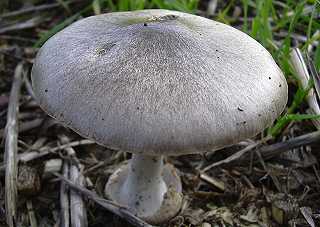
I am becoming passionate about fungus. I'm busy collecting spores, inoculating beds and researching the incredibly diverse and interesting fungi we have here on the farm and in the botanical garden. We're cooking with various species, making tea from others and thinking about how we can use still others in our reforestation and gardening projects.

There is very little tradition of using or collecting, or cultivating, mushrooms in Costa Rica, but little by little we are piecing together information from the indigenous workers we know. Thus we learned about the 'hongo de banano'.

This is actually Volvariella volvacea, the Paddy Straw mushroom, except here it grows from the stumps of bananas. And it's delicious. Very delicious picked right off the stump and carried straight to the frying pan. The only problem we have at the moment is that there are just not enough for our liking. So I'm collecting spores and inoculating banana fibers and coconut fibers, and growing mycelium on moist corrugated cardboard. I hope to increase these naturally occurring wonders to the point where they are springing from every banana plant and also from some specially prepared beds.

bananas

The banana trees are producing after a lull, and I'm very happy to see them. We have several varieties here on the farm, from the praying hands to the thousand fingers to the red to the cuadrado: we have no cavendish bananas. Twenty minutes drive north will take you through acres and acres of dwarf cavendish bananas, lined up in Chiquita and Del Monte plantations. The trees are tied with wire to support them and each heavy racaeme is enclosed in a blue plastic bag impregnated with pesticides. There are two issues facing the monocultured cavendish: nematodes and leaf blight, and there's rising fears that the cavendish will soon succumb like its predecessor, the gross michelle. Monocultures have a bad habit of being short term: once a pest or problem takes hold it can rip through a plantation without anything to stop it. Biodiversity makes sense!!

No-one here buys plantation bananas, even without the label they are easy to spot: no bugs or flies circling them. The cavendish works well for the plantation owners because it is a smaller tree with a high yield and quick too. The banana can be picked very green and ships well. Great in terms of shelf-life and presentation for supermarkets, but it loses a lot in terms of flavour. Cavendish bananas just don't taste as good.

Here on the farm we leave the bananas on the trees for as long as we can, to just days before the fruit bats devour them. We cut the 'trunk' and leaves and pile them around the base where they will gradually melt down into compost. The racaeme we hang until it ripens, sometimes covering it with a gunny sack to keep those bats and 'possums off. We dry a lot of our bananas for later use in trail mixes, granola and cookies, and we share the rest with the dogs who really enjoy them.

We grow cuadrados which are a short, stocky, 4 sided banana which is not as sweet and can be used like a plantain. They contain small round black seeds and are better if they are boiled for 10 minutes or so to soften them. If they are very ripe they don't need to be cooked. I've been making chutney and 'marmalade' and they do really well giving a good banana flavour but maintaining some form and bite.

Banana and Cinnamon 'marmalade'

24oz bananas, chopped (firmer cuadrados are better boiled first)
16oz raw brown sugar
1 1/2 teaspoons cinnamon (or to taste)

Heat sugar with a spoonful of water until dissolved, add bananas and cinnamon and simmer for 30 minutes or until a spoon will leave a clear trail on the bottom of the pot while stirring the mix. Can in sterilized glass jars and seal in a hot water bath.


Banana and Lime Chutney

6 cups chopped banana
grated rind from one lime
1 onion, chopped
2 cups raw brown sugar
1 cup cider vinegar (or banana vinegar if you have it!)
2 cloves garlic, or to taste
1/4 cup crystallized ginger
1/2 teaspoon fresh finely chopped hot chili, or to taste
1/2 teaspoon salt
good pinch black pepper
1 teaspoon mustard seeds

First boil sugar and vinegar, then add all other ingredients and simmer uncovered for at least 40 minutes until mixture is thickened and smells divine. Can in hot, steralized glass jars and seal in water bath. Chutney is great with cheese, chips, tortillas, Indian foods, straight out the jar.